Introduction
Flying with a small dog or cat can be much easier when you choose the right carrier. The best airline approved pet carriers need to balance several things at once: airline dimensions, under-seat fit, ventilation, security, comfort, and everyday usability. A carrier that looks perfect at home may not fit beneath the seat on your aircraft.
For in-cabin travel, the carrier is not simply a bag for carrying your pet through the airport. It becomes your pet’s travel space for much of the journey. The Federal Aviation Administration says an in-cabin pet container must fit under the seat without blocking the aisle and remain properly stowed during taxi, takeoff, landing, and aircraft movement. Airlines can also impose additional requirements.
That makes choosing among the best airline approved pet carriers more complicated than simply buying a product labeled “airline approved.” You need to compare the carrier with your airline’s rules and your aircraft’s available under-seat space.
What Makes the Best Airline Approved Pet Carriers?
The phrase “airline approved” does not represent one universal carrier specification. Airlines have their own requirements, and aircraft can have different under-seat dimensions.
For example, American Airlines currently recommends soft-sided carriers and lists 18 x 11 x 11 inches as its soft-sided guideline. It also notes that hard-sided carriers have different maximum dimensions and that regional aircraft can have tighter restrictions.
The best airline approved pet carriers generally have several important characteristics.

A Soft-Sided and Flexible Design
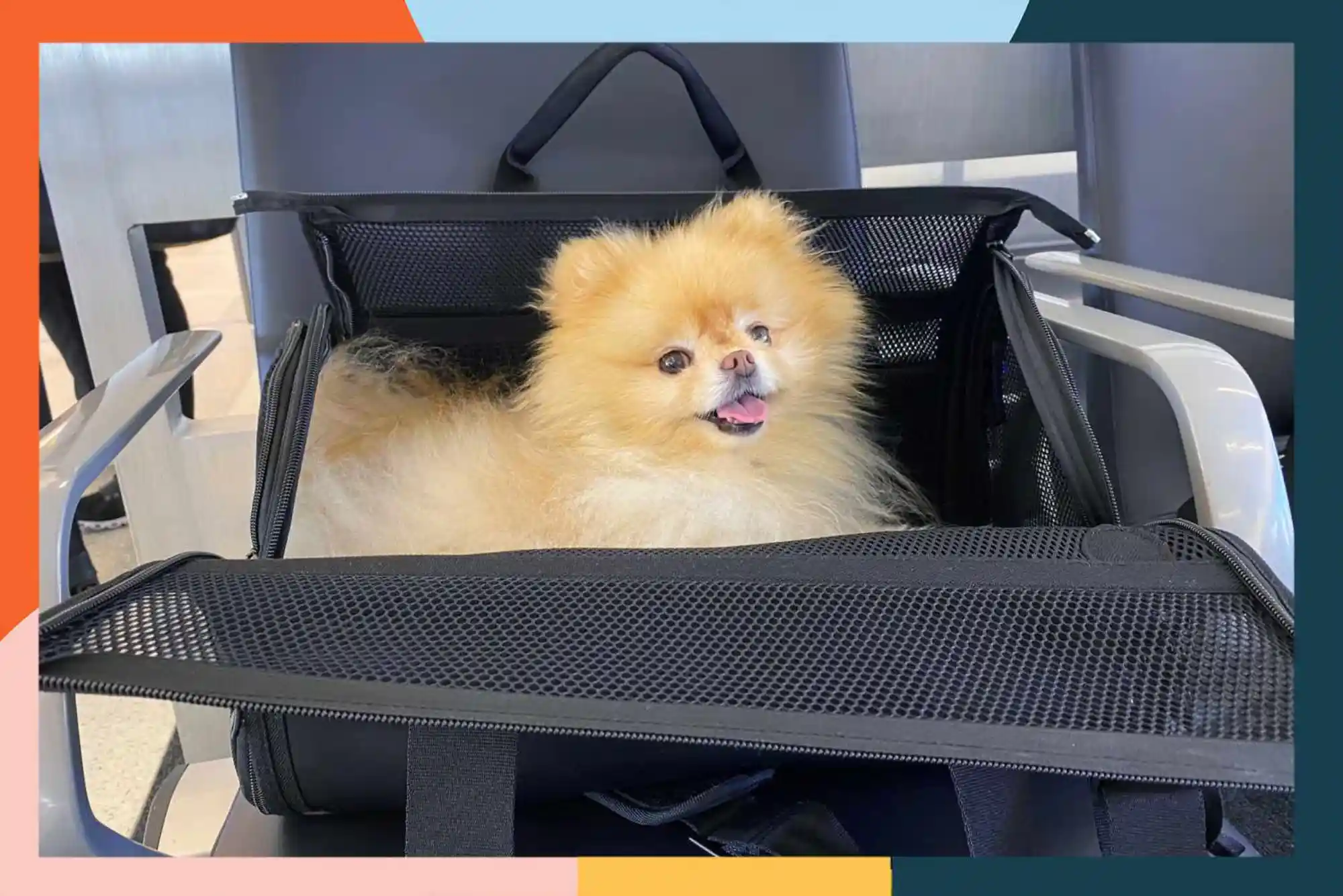
Soft-sided carriers are often practical for cabin travel because they have some flexibility. If the available space under the seat is slightly different from what you expected, a flexible carrier may compress without becoming unusable.
However, flexibility should not mean the carrier collapses onto your pet. A strong internal structure is important.
Good Ventilation
Look for generous mesh ventilation on multiple sides. Good airflow helps your pet remain comfortable, particularly during long airport waits.
American Airlines, for example, requires soft-sided carriers to have nylon mesh ventilation on at least three sides.
Secure Closures
Zippers should close securely and remain difficult for an anxious pet to push open. Some carriers also include internal safety clips that attach to a harness.
A safety clip should never replace a properly closed carrier. Think of it as an additional precaution.
A Leak-Resistant Base
Travel can be unpredictable. A waterproof or water-resistant bottom makes accidents considerably easier to manage.
A removable liner is another useful feature because you can clean it before and after a flight.
Why Under-Seat Fit Matters So Much
Under-seat fit is one of the most important factors when shopping for the best airline approved pet carriers.
The carrier normally has to slide completely beneath the seat in front of you. It cannot stick into the aisle or remain partly outside the designated space.
The FAA specifically requires an approved in-cabin pet container to fit under the seat without blocking anyone’s path to the main aisle.
This creates an important distinction between the carrier’s advertised dimensions and its real-world fit.
A soft-sided carrier might measure 18 inches tall when standing upright. Once underneath the seat, however, the available height could be lower. The carrier may need to compress slightly.
Measure the Aircraft, Not Just the Carrier
Do not assume every aircraft provides identical under-seat space.
Different aircraft models can have different seat configurations. Regional jets may also have noticeably tighter storage areas than larger aircraft.
American Airlines specifically notes that non-collapsible carriers cannot exceed the under-seat dimensions of the aircraft involved in your journey.
Before purchasing, check your airline’s current pet-carrier rules and, where possible, confirm the aircraft operating your flight.
Choosing the Right Carrier Size for Your Pet
Size selection involves two separate measurements: your pet’s body and the available aircraft space.
Your pet needs enough room to remain comfortable inside the carrier. At the same time, the carrier must meet the airline’s under-seat restrictions.
A useful starting point is to measure your pet from the nose to the base of the tail. Then measure standing height from the floor to the top of the head or ears, depending on your pet’s natural posture.
Do not buy a carrier based only on your pet’s weight.
Two pets weighing the same amount can have completely different body shapes. A long-bodied cat and a compact dog may require different carrier dimensions.
Avoid Buying the Largest Possible Carrier
Bigger is not automatically better for air travel.
A large carrier may provide extra room but fail the under-seat requirement. A slightly smaller carrier that your pet can comfortably use is often more practical.
The goal is enough space for your pet to move naturally without choosing dimensions that prevent the carrier from fitting beneath the aircraft seat.
Important Features to Look For
When comparing the best airline approved pet carriers, look beyond the dimensions printed on the packaging.
Ventilation and Visibility
Multiple mesh panels provide airflow and allow your pet to see outside.
Some pets become calmer when they can see their owner. Others settle more easily in a darker, partially covered space.
A carrier with flexible privacy panels can give you both options.
Padding
The bottom should provide enough cushioning for your pet to lie down comfortably.
Avoid extremely thick padding if it significantly reduces the internal height. Remember that the listed carrier dimensions are external dimensions, while your pet experiences the internal space.
Washable Materials
Air travel can involve spills, accidents, and food or water messes.
A removable washable mat can make cleanup much easier. Water-resistant fabric is also useful during airport transfers.
Storage Pockets
External pockets can be convenient for storing items such as waste bags, documents, wipes, or a small collapsible bowl.
However, avoid overloading them. Excess weight can make the carrier uncomfortable to carry through a large airport.
Strong Handles and Shoulder Straps
A good carrier should be comfortable for you, too.
A padded shoulder strap is particularly useful when walking through terminals. Strong handles make it easier to lift the carrier when boarding.
Backpack, Duffel, or Traditional Carrier?
The best airline approved pet carriers come in several designs, and each has advantages.
Traditional soft carriers are often the simplest option. They resemble small travel bags and are easy to place underneath the seat.
Backpack-style carriers can be convenient when walking through an airport, especially if you have additional luggage. However, some designs may have rigid frames or dimensions that make under-seat placement more difficult.
Expandable carriers provide additional space outside the aircraft. This can be useful at the airport or hotel, but the expansion section generally needs to remain closed while the carrier is under the seat.
The important question is not which design looks best. It is whether the carrier meets your airline’s specific requirements while keeping your pet comfortable.
Airline Rules Can Differ
One of the biggest mistakes travelers make is assuming that one carrier works for every airline.
That assumption can create problems at check-in.
The FAA leaves individual airline pet policies to the airlines themselves. Airlines may limit the number of pets, specify acceptable animals, require particular carrier characteristics, and impose additional procedures.
American Airlines, for example, says carry-on pets must remain inside the carrier and under the seat throughout the flight. It also restricts pet carriers from certain seats, including bulkhead and exit-row locations.
Your carrier therefore needs to be selected after checking your actual itinerary.
How to Prepare Your Pet for an In-Cabin Carrier
Even the best airline approved pet carriers will not automatically make your pet comfortable.
Start carrier training well before the flight.
Leave the carrier open at home and allow your pet to investigate it. Put familiar bedding inside and reward calm behavior.
Gradually increase the amount of time your pet spends inside. You can eventually practice carrying the closed carrier around your home or taking short car journeys.
The goal is to make the carrier feel familiar rather than introducing it for the first time at the airport.
Practice the Entire Travel Routine
A useful preparation exercise is to simulate the journey.
Place your pet inside the carrier, carry it around, move through different rooms, and practice remaining calm around unfamiliar sounds.
If your pet becomes highly anxious, speak with your veterinarian before traveling. Do not independently sedate your pet for a flight.
American Airlines says it does not accept pets that have been sedated or tranquilized and cites the increased respiratory and cardiovascular risks associated with sedation at altitude.
Common Mistakes When Buying a Pet Carrier
A carrier can look excellent online and still be wrong for your flight.
One common mistake is purchasing based on a generic “airline approved” label. There is no guarantee that the dimensions meet your particular airline’s requirements.
Another mistake is measuring only the outside of the carrier. Internal space matters for your pet, while external dimensions matter for the aircraft.
Travelers also sometimes forget to check seat restrictions. A carrier may meet the airline’s size requirement but still be prohibited in a particular row.
Finally, do not wait until the day of departure to check the pet policy. Airlines can limit the number of animals permitted in the cabin, so confirming the pet reservation early is important.
How to Choose the Best Airline Approved Pet Carrier
Start with your airline’s current rules.
Then identify the aircraft and check the permitted carrier dimensions. Once you know the maximum size, compare carriers that stay within those limits.
After that, evaluate ventilation, internal space, padding, security, cleaning, and carrying comfort.
Your final choice should satisfy three requirements at the same time: it must fit the aircraft, comply with the airline, and provide a comfortable environment for your pet.
That is a much better approach than choosing a carrier simply because it has thousands of reviews or a popular design.
FAQs
What size pet carrier fits under an airplane seat?
There is no single universal size. Many soft-sided in-cabin carriers are designed around dimensions near 18 x 11 x 11 inches, but airline and aircraft requirements vary. American Airlines currently lists 18 x 11 x 11 inches for soft-sided carriers.
Can I take a pet carrier on a plane?
Yes, some airlines allow eligible small pets to travel in the cabin inside an approved carrier. The carrier generally must remain under the seat during the flight. Airline rules determine which animals are permitted and what carrier requirements apply.
How strict are airlines about pet carriers?
Airlines can enforce carrier dimensions and other requirements at check-in and boarding. A carrier that is too large for the assigned aircraft may not be accepted, so checking your airline’s current requirements before departure is important.
Can a soft pet carrier fit under an airplane seat?
Yes. Soft-sided carriers are commonly used for in-cabin pet travel because they can offer some flexibility. However, the carrier still needs to fit properly under the seat and meet your airline’s requirements.
Can my dog stay in the carrier during the flight?
For airlines that permit carry-on pets, the pet generally must remain inside the carrier during the flight. American Airlines, for example, requires carry-on pets to stay in the carrier and under the seat for the entire flight.
What should I put inside an airline pet carrier?
Use a comfortable, washable liner or thin bedding that does not reduce the available space too much. Familiar bedding can also help your pet feel more secure.
Is a hard or soft pet carrier better for flying?
For many in-cabin trips, a soft-sided carrier is practical because it can provide some flexibility beneath the seat. However, the correct choice depends on your airline, aircraft, and pet. American Airlines currently recommends soft-sided collapsible kennels for carry-on pets.
Choosing among the best airline approved pet carriers is really about finding the right balance between airline compliance and pet comfort. The carrier needs to fit beneath the seat, provide adequate ventilation, remain secure, and give your pet enough room to travel comfortably.
Most importantly, do not rely solely on a product description saying “airline approved.” Check the current rules for the airline and aircraft you are actually flying. The FAA also recommends contacting the airline because individual policies can vary.
Before your trip, measure your pet, verify the carrier’s external and internal dimensions, practice carrier training, and confirm your pet’s reservation. A little preparation can make the airport experience far less stressful for both of you.