
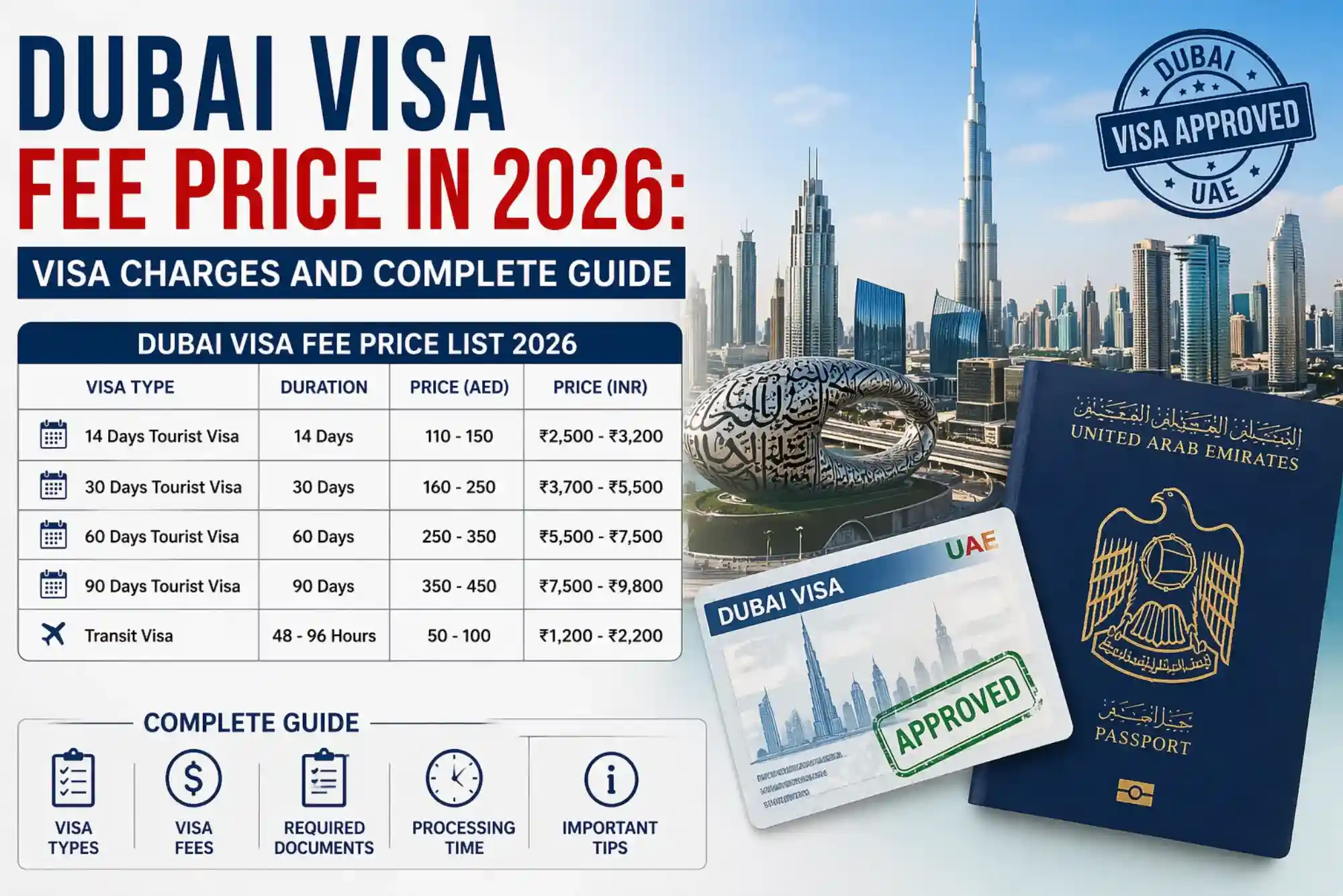
Planning a trip to Dubai in 2026 requires more than just booking a flight. One of the most important parts of your preparation is understanding the Dubai visa fee price in 2026, as costs can vary depending on visa type, duration, and processing method. Whether you are visiting for tourism, work, or long-term stay, knowing the updated visa charges helps you budget properly and avoid unexpected expenses.
Dubai continues to be one of the most visited destinations in the world, attracting millions of tourists and professionals every year. As demand increases, visa regulations and pricing structures are also updated periodically. In this guide, we break down everything you need to know about Dubai visa costs in 2026 in a simple and practical way.
Types of Dubai Visas in 2026
Before understanding the costs, it is important to know that Dubai offers several types of visas depending on your purpose of travel. Each category has different requirements and pricing structures.
Tourist Visa
This is the most common visa for travelers visiting Dubai for leisure, sightseeing, or short stays. It is usually available for 14, 30, or 60 days.
Visit Visa
A visit visa is typically sponsored by family or friends residing in the UAE. It allows slightly more flexibility in duration and extensions.
Work Visa
This visa is issued to individuals employed by UAE-based companies. It includes residency permits, medical tests, and Emirates ID processing.

Transit Visa
Designed for travelers stopping in Dubai for a short layover, usually valid for 48 to 96 hours.
Tourist Visa Fees Explained
The Dubai tourist visa remains one of the most in-demand travel documents. In 2026, the average cost varies depending on duration and processing speed. Short-term visas (14–30 days) are generally more affordable, while longer stays come at a higher price.
On average, tourist visa fees in 2026 range between moderate to premium pricing depending on the travel agency or online portal you choose. Additional service charges may also apply if you opt for express processing.
For official updates and immigration-related policies, travelers often refer to government sources such as UAE government portal for accurate information.
Visit & Short-Term Visa Costs
Visit visas are commonly used by family visitors and those planning extended stays. These visas can be sponsored by residents or companies within the UAE.
In 2026, visit visa pricing is slightly higher than tourist visas due to sponsorship requirements. However, they offer more flexibility, especially for individuals who may need extensions.
Applicants should also consider additional documentation fees, insurance requirements, and processing service charges when calculating total costs.
Work Visa and Residency Expenses
If you are planning to work in Dubai, your employer usually sponsors your work visa. However, there are still several associated costs that may be indirectly borne by the applicant.
These include medical fitness tests, Emirates ID registration, and residency stamping fees. Depending on job category and contract terms, the overall cost structure may vary significantly.
Many expatriates also manage financial responsibilities back home while working in Dubai. Services like sending money to UAE from abroad become essential for smooth financial planning during relocation.
Hidden Charges and Additional Costs
While visa fees are clearly defined, many travelers overlook additional expenses that can increase total travel costs. These include service charges from travel agents, insurance fees, express processing costs, and documentation handling charges.
Another often ignored cost is currency exchange and international transfers. Travelers moving funds or supporting families should plan carefully to avoid high transaction fees.
Dubai also has a well-structured financial system, but understanding utilities and living expenses is equally important. For example, modern housing often includes utility systems such as cost of living and utilities in Dubai, which can impact long-term budgeting decisions.
Factors Affecting Visa Prices
Several factors influence the final cost of a Dubai visa in 2026:
- Visa duration (short-term vs long-term)
- Type of visa (tourist, work, or visit)
- Processing speed (standard or express)
- Sponsorship requirements
- Agency or service provider fees
Peak travel seasons, such as holidays and major events, can also slightly increase processing times and service charges due to high demand.
Travel & Living Cost Considerations in Dubai
Understanding visa fees is only one part of planning your trip. Transportation, accommodation, and daily living costs also play a major role in your overall budget.
Dubai offers an efficient public transport system that makes it easy for visitors to explore the city without high expenses. Locations like Dubai public transport connectivity provide convenient access to major tourist and business districts.
For long-term visitors or expats, logistics also become important. Many residents often rely on international shipping services for personal belongings. If you are planning relocation, understanding options like shipping goods from Dubai to India can be extremely helpful.
In addition, Dubai offers a wide range of services, accommodation options, and lifestyle choices, making it suitable for both short visits and long-term stays. Careful budgeting ensures a smoother travel experience and avoids financial stress during your stay.
Conclusion
The Dubai visa fee price in 2026 depends on several factors including visa type, duration, and processing method. While tourist visas remain affordable for short stays, work and residency visas involve additional steps and costs. Understanding these charges in advance allows travelers and expats to plan better and avoid unexpected expenses.
Dubai continues to evolve as a global travel and business hub, and staying informed about visa updates is essential for smooth entry and stay. By planning carefully and considering all associated costs, you can enjoy a hassle-free experience in one of the world’s most dynamic cities.