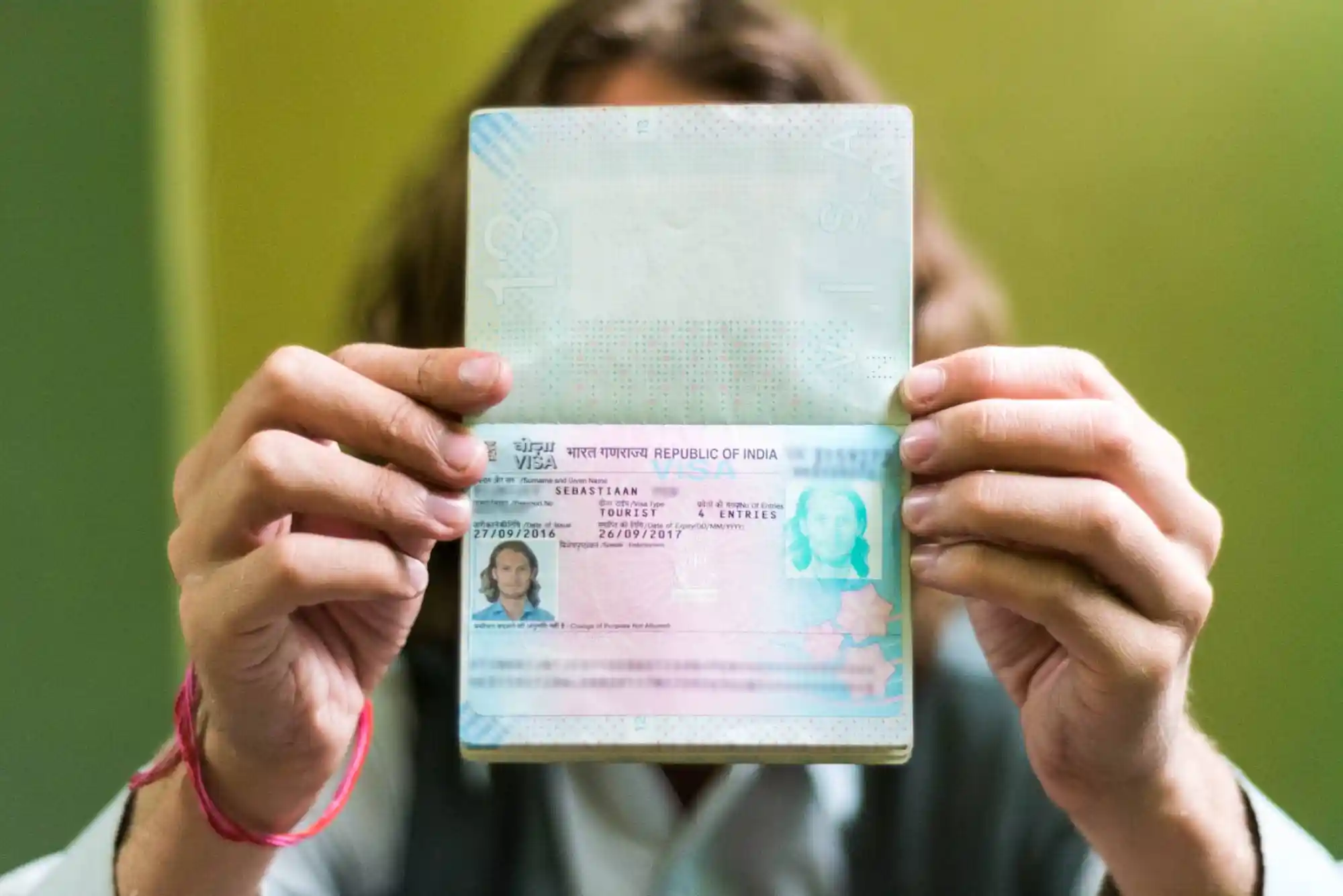

Vietnam has quietly become one of Asia’s most competitive travel destinations for international visitors — a country where ancient temples sit alongside emerald rice paddies, where Hanoi’s Old Quarter buzzes with scooters and street food, and where Ha Long Bay draws cruise boats from every continent. And the country’s visa policy has kept pace with its tourism ambitions. The Vietnam e-Visa, introduced for all nationalities in 2023, remains one of the most affordable and streamlined entry systems in Southeast Asia. The e visa price for Vietnam in 2026 is $25 USD for a single-entry visa and $50 USD for multiple entry — official government fees that have been stable and confirmed for 2026.
But as with most visa systems, the price you see advertised is not always the price you pay. Third-party websites, agency service charges, and the practical extras of applying create a total cost picture that differs from the simple government fee. This guide covers every number, every platform, and every relevant rule for 2026 — including the critical visa-free access question that determines whether you even need to apply in the first place.
For travellers comparing Vietnam’s visa cost against other popular destinations in the region, our UK visit visa price guide for 2026 illustrates how dramatically costs can vary across destinations, helping you put Vietnam’s accessible $25 fee in its proper global context.
What the Vietnam eVisa Covers in 2026
Vietnam’s e-Visa system, overhauled in August 2023 and continuing in full operation through 2026, applies to nationals of all countries and territories recognised by Vietnam — 152 nationalities in total. This makes it one of the most universally available eVisa programmes in Asia. The e-Visa grants a maximum stay of 90 days per entry, a significant improvement over the previous 30-day limit, and comes in both single-entry and multiple-entry formats.
The e-Visa is applied for entirely online through Vietnam’s official immigration portal, approved digitally, and presented at the port of entry alongside your passport. No physical stamp is required before travel, no embassy visit is necessary, and no biometric appointment is part of the process. For most international travellers, the entire application from start to completion takes under 20 minutes.
Since the August 2023 revision, Vietnam’s e-Visa allows stays of up to 90 consecutive days — triple the previous 30-day limit. This makes it viable for longer-stay tourists, digital nomads, and slow travellers who previously had to manage complex visa-run strategies. The 90-day limit applies to both single-entry and multiple-entry variants.
Who Needs a Vietnam eVisa in 2026 — and Who Qualifies for Visa-Free Entry?
Before spending $25, it is worth confirming whether you actually need the Vietnam e-Visa at all. Vietnam has a visa-free exemption framework that grants nationals of specific countries free entry without any application or fee. In 2026, the visa-free nationalities include citizens of:

ASEAN member states (Thailand, Malaysia, Singapore, Philippines, Indonesia, Brunei, and others) enjoy extended visa-free periods under bilateral agreements. European countries including the UK, France, Germany, Italy, Spain, Sweden, Denmark, Finland, Norway, and others receive visa-free access for 45 days. Citizens of Japan, South Korea, Russia, Chile, and several others also receive visa-free entry ranging from 14 to 45 days depending on the specific bilateral arrangement.
Travellers from India, Pakistan, the United States, Canada, Australia, China, and many other countries require the e-Visa — but the $25 USD fee makes it one of the most affordable entry visas to any major travel destination worldwide.
Visa-free arrangements change when bilateral diplomatic agreements shift. Always verify your specific nationality’s current status on Vietnam’s official immigration website (xuatnhapcanh.gov.vn) before purchasing an e-Visa — paying $25 for a document you do not need is an avoidable expense.
Official Vietnam eVisa Price in 2026: Government Fee Structure
The official e-Visa fee is set and collected by Vietnam’s Immigration Department (the Ministry of Public Security). The fee is denominated in USD and is the same for all eligible nationalities — there is no nationality-based variation in the government rate.
| eVisa Type | Official Fee (USD) | Max Stay | Entry Type | Notes |
|---|---|---|---|---|
| Single Entry eVisa | $25 | Up to 90 days | Single | Best for one-trip tourists and first-time visitors |
| Multiple Entry eVisa | $50 | Up to 90 days per visit | Multiple | For frequent visitors, regional travellers, digital nomads |
| eVisa extension (inside Vietnam) | ~$25 (approx.) | Up to additional 90 days | Depends on existing visa | Applied at immigration offices inside Vietnam; availability varies |
| Source: Vietnam Immigration Department (xuatnhapcanh.gov.vn). Fees confirmed for 2026. Non-refundable once paid through official portal. | ||||
Third-Party eVisa Services: Why the Price You See May Be Much Higher
This is the single biggest source of confusion in Vietnam e-Visa pricing — and where most travellers who feel overcharged have made their mistake. Dozens of private websites appear in search results when you look for “Vietnam e-Visa,” and many of them charge $60–$120 USD or more for what is ultimately the same approved e-Visa document you can obtain for $25 directly from the government.
Third-party services add a service charge on top of the government fee. This is legal, and some travellers do find value in the additional customer support and document-checking these services offer. But it is entirely optional. The official Vietnam e-Visa portal is straightforward, accepts credit and debit card payments, and delivers approved visas to most applicants within 3 business days. Applying directly saves $35–$95 per person compared to most third-party platforms.
| Application Method | Government Fee (USD) | Service Charge | Realistic Total | Best For |
|---|---|---|---|---|
| Official portal (evisa.xuatnhapcanh.gov.vn) | $25 | $0 | $25 single / $50 multiple | Most applicants — straightforward and cost-effective |
| Licensed visa agency (basic) | $25 | $20–$40 | $45–$65 | Travellers who want document verification support |
| Premium third-party service | $25 | $40–$80+ | $65–$110+ | Largely unnecessary for standard applications |
| All-inclusive tour operator (eVisa bundled) | $25 | Absorbed into tour price | Included in package | Package holiday travellers; convenience only |
| Note: The government fee and the final approved document are identical regardless of application channel. Third-party services provide a convenience layer only. | ||||
Complete Vietnam eVisa Cost Breakdown: All Charges Included
For most travellers applying directly through the official portal, the total cost is straightforward. But a few additional practical costs are worth accounting for in your overall Vietnam travel budget.
| Cost Component | Amount (USD) | Mandatory? | Notes |
|---|---|---|---|
| Government eVisa fee (single entry) | $25 | Yes | Non-refundable; paid online via official portal |
| Government eVisa fee (multiple entry) | $50 | If multiple entry chosen | Same non-refundable policy |
| Card foreign transaction fee | 1–3% of total | Auto-applied by bank | Use a zero-FX card to avoid; adds $0.25–$0.75 on $25 fee |
| Passport photograph (digital) | $0–$5 | Yes | Can use a free smartphone app (ID Photo, Passport Photo apps) or pay a service |
| Third-party service fee (if used) | $20–$80+ | Optional | Entirely avoidable by using the official portal |
| Visa extension inside Vietnam | ~$25 approx. | If extending | At immigration offices in major cities; availability not guaranteed |
| Realistic total for most applicants (direct, single entry): $25–$27 USD including any card fee. Equivalent to approximately £20–£22 / €23–€25 at current exchange rates. | |||
Single Entry vs. Multiple Entry eVisa: Which Should You Choose?
The price difference between a single-entry ($25) and multiple-entry ($50) Vietnam eVisa is $25 — exactly the cost of a second single-entry visa. The choice should be driven by your travel plan rather than the price point alone.
Choose the single-entry eVisa if your trip is a straightforward visit to Vietnam — fly in, explore the country, fly home. The 90-day maximum stay covers even extended Vietnam-only trips comfortably. The single entry becomes void once you depart Vietnam, even if the 90-day period has not expired.
Choose the multiple-entry eVisa if you are planning a regional itinerary that involves day trips or short stays in neighbouring countries — crossing into Cambodia via the Moc Bai border crossing, flying to Laos for a long weekend, or taking the land crossing into China. Each exit from Vietnam uses one “entry” of a single-entry visa, rendering it void for re-entry. The multiple-entry at $50 covers all re-entries within the 90-day validity window and represents significant savings for regional travellers compared to buying multiple single-entry visas.
A traveller with a single-entry Vietnam eVisa who exits Vietnam to spend one day in Cambodia — even for a genuine day trip — loses their Vietnam visa entirely on departure. Re-entry to Vietnam requires a new $25 application and 3 business days of processing. Regional travellers who know they will cross any border during their Vietnam trip should always purchase the multiple-entry option upfront.
Vietnam eVisa vs. Visa on Arrival: Is the VOA Still Relevant?
Before the e-Visa system was expanded to all nationalities in August 2023, the “Visa on Arrival” (VOA) was a common alternative pathway for travellers who could not access the e-Visa. The VOA required a pre-approval letter obtained through a travel agency, which was then exchanged for a physical visa stamp at the airport. This two-step process typically cost $15–$25 USD for the letter plus a $25–$50 USD stamping fee at the airport — totalling $40–$75 before any agency markup.
In 2026, the VOA is essentially obsolete for most air travellers. The e-Visa system accepts applications from all 152 nationalities, processes faster, costs the same or less in total, and eliminates the need to pre-purchase an approval letter from a third party. The only scenario where a land border arrival without prior e-Visa approval might still be relevant is for certain overland crossings — but even these are increasingly handled by e-Visa. Apply via the official portal in advance; do not turn up hoping for a VOA pathway that may no longer be smoothly operational.
Step-by-Step: How to Apply for a Vietnam eVisa in 2026
The official Vietnam e-Visa portal (evisa.xuatnhapcanh.gov.vn) is the only authorised platform for government-rate applications. The following steps apply to all nationalities applying for the standard tourist e-Visa.
-
Visit the official Vietnam immigration portal
Go to evisa.xuatnhapcanh.gov.vn. Do not use Google Ads results — they frequently lead to third-party services. The official URL ends in .gov.vn. Click “Grant e-Visa” to begin a new application. -
Choose your visa type: single or multiple entry
Select “E1” for single entry or “E2” for multiple entry. Both allow stays up to 90 days — the only difference is the number of times you can enter and exit Vietnam within the visa’s validity period. Multiple entry costs $50; single entry costs $25. -
Complete the application form
Enter your full name exactly as it appears in your passport, your nationality, passport number, passport expiry date, intended entry date, point of entry (airport or border crossing), and accommodation address for your first night in Vietnam. Upload a digital passport-size photograph (white background, clear face, no glasses or hat) and a scan of your passport biographical data page. -
Pay the visa fee online
Payment is accepted by Visa, Mastercard, and JCB credit/debit cards through the portal’s secure payment gateway. The fee is charged in USD. If your card is issued in another currency, your bank will apply a conversion rate — typically 1–3% above the interbank rate. Save your payment receipt and note the application number. -
Wait for approval
Standard processing takes approximately 3 business days. Many applications receive approval within 24–48 hours. You will be notified by email. Check your spam folder if the notification does not arrive — Vietnamese government email often triggers spam filters in some mail clients. -
Download and print your e-Visa
Once approved, log back into the portal with your application number to download the e-Visa PDF. Print a physical copy — Vietnam immigration requires a printed document at the port of entry. Also save a digital copy on your phone as a backup. Present your printed e-Visa alongside your passport to the immigration officer on arrival.
While standard processing takes 3 business days, “business days” excludes weekends and Vietnamese public holidays. An application submitted on a Friday before a Vietnamese public holiday could take 6–8 calendar days to process. Build in a full week before travel to ensure your approval arrives comfortably before departure.
Processing Time and What to Expect After Applying
Vietnam’s official portal processes the vast majority of applications within 3 business days. A smaller number of applications are processed within 24 hours, while a minority — typically those with unusual travel history or incomplete documentation — may take up to 5 business days. The system sends a notification email when the decision is ready.
| Processing Scenario | Estimated Timeframe | Notes |
|---|---|---|
| Standard application, complete documents | 3 business days | Most applications fall here |
| Straightforward application, busy period | 3–5 business days | Around Vietnamese national holidays, processing may slow |
| Applications with minor issues / incomplete docs | 5–7 business days | System may request additional information |
| Rejected and reapplied | Fresh 3-day window | Full fee paid again; no fast-track for reapplication |
Vietnam eVisa for Different Nationalities in 2026
Unlike some countries that apply different fee rates based on nationality (a practice called visa reciprocity), Vietnam charges the same $25 / $50 fee to all eligible nationalities without exception. An American, an Indian, a Nigerian, and a Brazilian all pay the same fee and receive the same e-Visa on the same processing timeline.
The nationality distinction in Vietnam’s entry system appears not in the e-Visa fee but in the visa-free access framework. Nationals of countries with visa-free agreements pay nothing at all — while everyone else pays the flat $25 or $50 government rate. This makes Vietnam particularly well-regarded among international travel communities for its transparent, non-discriminatory fee structure.
Vietnam eVisa vs. Other Southeast Asian Country Visa Costs in 2026
Vietnam’s $25 single-entry e-Visa is one of the most competitive in the region. Here is how it compares against neighbouring and popular alternative destinations:
| Destination | Entry Type | Fee (Most Nationalities) | Max Stay | Notes |
|---|---|---|---|---|
| Vietnam | eVisa | $25 / $50 | 90 days | All nationalities eligible; same fee for all |
| Thailand | Visa on arrival / eVisa | ~$35 USD (VoA) | 30 days | eVisa being expanded; some nationalities visa-free 60 days |
| Cambodia | eVisa / VoA | $30 USD | 30 days | evisa.gov.kh; third parties charge $5–$20 more |
| Bali (Indonesia) | Visa on Arrival / eVoA | $35 USD | 30 days (extendable) | Paid on arrival or via eVoA pre-arrival |
| Malaysia | Visa-free (many nations) | $0 | 90 days | Very wide visa-free list; eNTRI for some |
| Singapore | Visa-free (many) / eVisa | $30 USD (eVisa) | 30 days | Most Western nationalities visa-free |
| Philippines | Visa-free (many nations) | $0 / ~$52 USD (VoA) | 30 days | 157 nationalities visa-free; others need prior visa |
Vietnam’s $25 fee with a generous 90-day stay allowance stands out as exceptional value — particularly compared to Thailand’s 30-day limit on visa-on-arrival entries and Cambodia’s similar $30 fee for a shorter 30-day stay. For longer-stay travellers or digital nomads exploring the region, Vietnam’s e-Visa offering is among the most competitive available.
Travellers comparing Vietnam alongside Middle Eastern destinations as part of a broader trip budget may find our Dubai visa price in USD for 2026 and our Dubai visit visa for Pakistani nationals guide helpful for understanding how fee structures vary across regions.
Common Mistakes to Avoid with the Vietnam eVisa
- Applying through a paid third-party website and paying $60–$110 for a visa that costs $25 on the official portal. The outcome is identical — only the price differs. Always start at evisa.xuatnhapcanh.gov.vn.
- Choosing single entry for a multi-country itinerary that includes border crossings into Cambodia, Laos, or other neighbours. A single exit voids the single-entry visa for re-entry. Always go multiple entry if any border crossing is planned.
- Uploading a non-compliant photograph — the portal rejects photos taken in dim lighting, with backgrounds other than white, with glasses, or where the face is partially obscured. Use a free ID photo app to format the image correctly before uploading.
- Applying too close to the departure date — 3 business days is the processing target, not a guaranteed same-day service. Apply at least 5–7 calendar days before travel to account for weekends, public holidays, and any minor processing delays.
- Entering the wrong port of entry on the application form — your e-Visa specifies the approved entry point. Arriving at a different airport or land border from the one stated on your visa can result in complications at immigration. If plans change, you must apply for a new e-Visa with the corrected entry point.
- Losing the printed e-Visa document while in Vietnam — the printed copy is required for departure processing at some airports. Keep it safe throughout your trip, and save a cloud backup of the PDF.
Frequently Asked Questions: Vietnam eVisa Price in 2026
1. Is the Vietnam eVisa fee the same for all nationalities?
Yes — Vietnam charges a flat fee of $25 USD for single entry and $50 USD for multiple entry to all eligible nationalities, with no nationality-based variation. This applies whether you hold an American, Indian, Pakistani, Nigerian, or any other eligible passport. Nationals of visa-exempt countries pay nothing, but all others pay the same flat rate.
2. How long does the Vietnam eVisa take to process in 2026?
Standard processing through the official portal takes approximately 3 business days from the time of complete submission. Many applications receive approval within 24–48 hours. Apply at least 5–7 calendar days before your departure date to allow for weekends and Vietnamese public holidays, which do not count as business days.
3. Can I extend my Vietnam eVisa if I want to stay longer than 90 days?
Extensions are technically available through Vietnam’s immigration offices in major cities, but the process is not always straightforward and availability varies. The extension fee is approximately $25 USD, adding another 90-day period. Many longer-stay travellers find it simpler to exit Vietnam (a neighbouring country’s border crossing or a short flight to another country) and re-enter with a new multiple-entry e-Visa, provided their original visa is a multiple-entry type.
4. Is the Vietnam eVisa fee refundable if I cannot travel?
No — the Vietnam e-Visa fee is non-refundable once paid, regardless of whether your travel plans change, the application is approved or rejected, or you decide not to use the visa. The refund policy is the same as most government visa fees worldwide — payment covers the processing service, not the outcome.
5. Which is better — applying directly or through a third-party service?
For most applicants, applying directly through the official portal at evisa.xuatnhapcanh.gov.vn is the better choice — it is cheaper, equally fast, and produces the same approved document. Third-party services add a service fee of $20–$80+ on top of the government rate. The only meaningful benefit of a third-party service is human support if you encounter an error in your application — for straightforward applications, this is rarely worth the premium.
Vietnam eVisa Price in 2026: The Complete Picture
The e visa price for Vietnam in 2026 is straightforward and genuinely competitive: $25 USD for a single-entry visa and $50 USD for multiple entry — official government fees charged identically to all eligible nationalities, with no hidden government surcharges and no reciprocity fees. Processing takes approximately 3 business days, the application is entirely online, and the system is one of the most user-friendly in Southeast Asia.
The single most important piece of advice for any Vietnam eVisa applicant: use the official portal. The government fee is the only cost when you apply directly. Third-party services are legal but charge $20–$80 more for the same document. Apply at least 5–7 days before travel, choose multiple entry if any border crossing is planned, and print your approved e-Visa before departure.
Vietnam’s 90-day stay allowance, combined with a $25 entry cost, makes it one of the most accessible and flexible destinations in Asia for international travellers in 2026. For more visa cost guides and destination planning resources, explore our travel prices category at TravelsNeon for detailed fee breakdowns across dozens of global destinations.
Related Reading: Europe Country Visa Price in 2026: Visa Charges and Fee Guide
Related Reading: E Visa Bali Price in 2026: Visa Charges and Fee Guide